

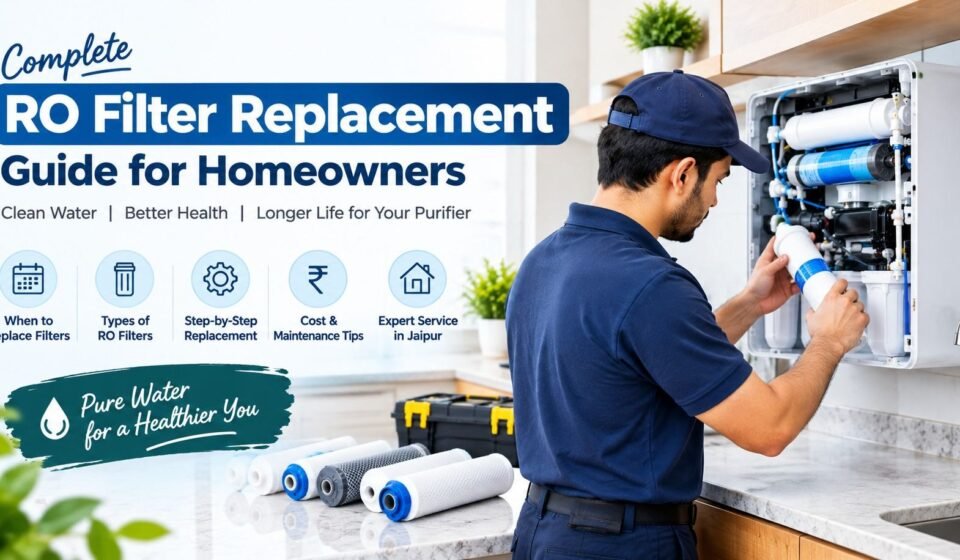

A water purifier can only perform effectively when its filters are in good condition. Over time, RO filters collect impurities, sediment and other contaminants, which can reduce water flow and affect the overall performance of the purifier.
Regular RO filter replacement is therefore an important part of water purifier maintenance. But how do you know when a filter needs to be changed? Which filters need replacement? How often should they be replaced? And should you replace them yourself or call a professional?
This complete guide explains everything homeowners should know about RO filter replacement and maintenance.
What Is an RO Filter?
An RO water purifier generally uses multiple filtration stages to improve the quality of incoming water. Depending on the purifier model, these can include sediment filters, activated carbon filters, RO membranes, post-carbon filters and other specialized filters.
Each component has a different purpose.
For example:
- Sediment filter: Helps remove suspended particles such as dirt, sand and rust.
- Pre-carbon filter: Helps reduce chlorine, odour and certain organic impurities.
- RO membrane: Uses reverse osmosis technology to reduce dissolved substances from water.
- Post-carbon filter: Helps improve the taste and odour of purified water.
- Additional filters: Some systems may include UV, UF, mineral or other specialized filtration stages.
The exact filter configuration varies between RO models, so replacement requirements should be checked according to the purifier manufacturer’s specifications.
Why Is RO Filter Replacement Important?
Filters do not last forever. As they collect impurities, their performance can gradually decrease.
A filter that has not been replaced when required may contribute to:
- Reduced water flow
- Slower purification
- Changes in taste or odour
- Increased load on other components
- Reduced overall purifier performance
- Higher maintenance requirements
Regular maintenance helps keep the purification system functioning properly.
However, homeowners should not automatically replace every filter at the same time. The replacement requirement depends on water quality, usage, purifier design and the condition of individual components.
How Often Should RO Filters Be Replaced?
There is no universal replacement schedule that applies to every RO purifier.
Filter life can depend on:
- Quality of incoming water
- TDS level
- Water hardness
- Daily water consumption
- Number of people using the purifier
- Filter quality
- Type of RO system
- Maintenance history
Some filters may require more frequent replacement than others.
The best approach is to follow the purifier manufacturer’s recommendations and have the system inspected when performance changes.
Signs That Your RO Filters May Need Replacement
Homeowners should watch for changes in the purifier’s performance.
1. Water Flow Has Become Slow
If your RO produces water much more slowly than it used to, clogged or exhausted filters may be one possible cause.
However, low water pressure, membrane problems and other technical issues can produce similar symptoms.
2. Change in Water Taste
A noticeable change in the taste of purified water may indicate that one or more filtration components require inspection.
It is better to investigate the cause rather than simply replacing components without diagnosis.
3. Unusual Smell
If purified water develops an unusual smell, the filters and other purification stages should be checked.
A filter that has reached the end of its useful life may contribute to changes in taste or odour.
4. Filters Look Dirty or Heavily Used
Visible discoloration can sometimes indicate that a filter has accumulated sediment.
However, appearance alone should not always determine whether a filter needs replacement. The purifier’s performance and maintenance schedule should also be considered.
5. Increased Purification Time
If your purifier suddenly takes much longer to fill its storage tank, clogged filters or other system issues could be responsible.
A professional inspection can help identify the actual cause.
6. Frequent RO Problems
Repeated issues with water flow, taste, leakage or purification performance may indicate that the system needs comprehensive maintenance rather than another temporary repair.
Different Types of RO Filters and Their Functions
Understanding the different filtration stages can help homeowners understand their maintenance requirements.
Sediment Filter
The sediment filter is generally placed near the beginning of the purification process.
It helps reduce suspended particles such as:
- Dirt
- Sand
- Rust
- Dust
- Other visible particles
Because it receives the initial load of suspended impurities, it can become clogged over time.
Pre-Carbon Filter
The pre-carbon filter helps reduce chlorine, odours and certain organic compounds depending on the filter design.
Maintaining this stage is important because the filtration process depends on multiple components working together.
RO Membrane
The RO membrane is a key component of a reverse osmosis system.
It uses a semi-permeable membrane to reduce many dissolved substances from water.
Membrane life varies depending on:
- Incoming water quality
- Water pressure
- Pre-filtration
- Usage
- Maintenance
A membrane should not automatically be replaced simply because a certain amount of time has passed. Its condition and system performance should be evaluated.
Post-Carbon Filter
The post-carbon filter is commonly used after the main purification stages and can help improve the taste and odour of treated water.
Like other filters, it requires replacement according to its condition and the purifier’s maintenance requirements.
Can You Replace RO Filters Yourself?
Some homeowners may be able to replace simple filter cartridges on certain purifier models.
However, RO systems contain multiple components, tubing connections and filtration stages. Incorrect installation can result in:
- Water leakage
- Incorrect connections
- Poor filtration performance
- Damage to components
- Contamination risk
If you are unsure about the correct filter, installation procedure or condition of the purifier, professional service is a safer option.
How Professional RO Filter Replacement Works
A professional technician generally follows a systematic process.
Step 1: Inspect the Purifier
The technician checks the purifier and understands the reported problem.
Step 2: Check the Filters
The condition of the relevant filters is assessed.
Step 3: Identify the Required Replacement
Only the components that require replacement should be recommended, based on the purifier’s condition and manufacturer’s specifications.
Step 4: Replace the Filter
The appropriate replacement filter is installed correctly.
Step 5: Check Connections
The technician checks pipes, connectors and filter housings for potential leaks.
Step 6: Test the Purifier
The system is operated after servicing to check water flow and overall performance.
How Much Does RO Filter Replacement Cost?
The cost of RO filter replacement varies depending on:
- Number of filters
- Filter type
- Purifier model
- Brand
- Membrane requirement
- Service charges
- Quality of replacement components
A simple filter change can cost considerably less than a complete filter and membrane replacement.
Instead of choosing a service solely based on the lowest price, homeowners should consider the quality and compatibility of replacement components.
RO Filter Replacement in Jaipur
Water quality can vary across different areas, and household water sources can also differ.
For homeowners in Jaipur, regular RO maintenance can help identify filter-related problems before they become larger system issues.
If you are searching for:
RO filter replacement in Jaipur
RO filter change near me
RO service in Jaipur
RO technician in Jaipur
water purifier filter replacement in Jaipur
Fikarnot provides doorstep RO and water purifier services across its serviceable areas in Jaipur.
Why Choose Fikarnot for RO Filter Replacement?
Fikarnot provides water purifier services designed around the actual condition of the purifier.
Services include:
- RO filter replacement
- RO repair
- RO servicing
- RO installation
- RO uninstallation
- RO membrane replacement
- Water purifier maintenance
- AMC services
The objective is to identify the problem, recommend the appropriate service and help maintain the purifier’s performance.
How to Extend the Life of Your RO Filters
You can take several simple steps to maintain your purifier.
1. Follow the Recommended Service Schedule
Do not wait until the purifier completely stops working before checking it.
2. Monitor Water Quality
Pay attention to unusual changes in taste, smell or appearance.
3. Don’t Ignore Low Water Flow
A gradual reduction in water flow can indicate a filter or other system problem.
4. Keep the Purifier Clean
Regular external cleaning and proper hygiene around the purifier help maintain a cleaner environment.
5. Use Compatible Replacement Filters
The replacement component should be compatible with your purifier model and filtration system.
6. Get the System Checked Periodically
Professional inspection can help identify worn or clogged components before they cause larger problems.
Common Mistakes Homeowners Make
Replacing All Filters Without Checking Them
Different filters have different functions and lifespans. Replacing everything without inspection may lead to unnecessary expenses.
Waiting Until the RO Stops Working
A purifier may continue operating even when its performance has already declined.
Choosing Filters Only by Price
The cheapest replacement component is not necessarily the most suitable option for your purifier.
Ignoring Water Leakage
Even a small leak can become a bigger problem if left unattended.
Forgetting the RO Membrane
The membrane is a critical part of an RO system and should also be checked when diagnosing performance problems.
Frequently Asked Questions
How often should RO filters be replaced?
There is no fixed period for every purifier. Filter life depends on water quality, usage, purifier design and maintenance. Follow the manufacturer’s recommendations and inspect the system when performance changes.
What are the signs of a bad RO filter?
Common signs can include reduced water flow, changes in taste or odour, longer purification time and repeated purifier performance issues. These symptoms can also have other causes, so proper diagnosis is recommended.
Can I replace an RO filter myself?
Some cartridge filters can be replaced by homeowners, depending on the purifier design. If you are unsure about the correct component or installation, professional service is recommended.
Does a low TDS reading always mean the RO is working properly?
Not necessarily. TDS is only one measurement and does not provide a complete assessment of water quality or overall purifier performance.
Should I replace the RO membrane with the filters?
Not necessarily. The membrane and other filters have different functions and replacement requirements. They should be checked separately.
How much does RO filter replacement cost in Jaipur?
The cost depends on the purifier model, filter type, number of components requiring replacement and service requirements.
Where can I get RO filter replacement in Jaipur?
Fikarnot provides RO and water purifier services in Jaipur and its serviceable areas. You can contact the team to check availability at your location.